Showing posts with label Rebecca O. Johnson. Show all posts

Tuesday, August 16, 2016

Stop the Sasol Land Grab of Mossville!

East side of Mossville 2012 at
Industries Fenceline
In case you missed my e-newsletter, here is the email I wrote to Administrator Gina McCarthy:

Dear Administrator McCarthy:

Last week your Region 6 office participated in the ongoing injustice being suffered by the people of Mossville Louisiana, and thereby became complicit in the land grab being 
perpetrated by Sasol, the apartheid era
East side of Mossville 2016
South African oil company. When Re
gion 6 endorsed the suspect industry Voluntary Property Purchase process they helped cover up Sasol's coercive, deceptive and financially inadequate program to take possession of this 225 year old community. I urge you to make Sasol return to negotiations with Mossville residents and Mossville Environmental Action Now. Impel Sasol to make Mossville residents whole, debt free, and fully housed.


Please write EPA Administrator McCarthy today!

McCarthy.Gina@epa.gov

Thursday, March 24, 2016

Engaging New Learning Environments

As some of you know, I am now working full-time at SLC developing an End of Life Care Program.  As part of that I am developing learning opportunities that are both online and face-to-face.  To help me get a grip on this I am taking an online course called #BlendKit2016, to help me learn about course development and to develop my own practice in this new learning environment.  So this is my first reaction blog to a 5 week course that will end next week.  As a learner I am finding that I am able to put off doing online work almost indefinitely.  This is important self-reflection for designing for students who may be like me -- late middle-aged, abundantly degreed, easily bored.

Anyway.  The most striking statement in the first chapter of readings was to "Begin with relevant metaphors for learning" (Thompson, ed., Reader BlendKit Learning Toolkit, https://blended.online.ucf.edu/, p. 9).  To me this is the second starting place.  The first is the "relevant metaphors" for learners.  Individual need is highly valued in the theorizing so far.  This is important but I am equally concerned about building learning community and how adults, especially, come together to learn and solve problems. Transmission of information is important, and addressing barriers to learning for individuals is the obvious task of any teacher.  So I will reflect on these two metaphors and get back to you.

In the case study #2 the chart on critical design decisions is immensely helpful, as is the description of studio-based instruction. Both case studies used a similar design strategy, beginning with "learning and teaching principles" (p. 10), suggesting what is specific to the field or discipline, choosing the learning technology that fits the field, the setting, the teaching capacity and the principles, and then describing how online and face-to-face will interact and complement each other.

There.  I did my assignment.


Sunday, May 03, 2015

The Exodus of the People of Mossville, Part 3: Who Is Sasol?

This is 3rd in a series of posts on the Exodus of the People of Mossville, Louisiana, an historically African-American community founded in the late 1800s by Jack Moss. Sasol, the South African synthetic oil company, is buying up property to build the first North American (fracked) gas to liquids plant.

The following facts are drawn from the Mossville Environmental Action Now website (see website for citations):

Who Is Sasol?

  • Founded in 1950 in South Africa, in response to international communities' fuel embargo due to the practice of apartheid. 
  • In 1954, Sasol created Sasolburg to supply housing and facilities for employees; it segregated the development into Sasolburg proper (exclusively for white employees) and Zamdela township (for non-whites).
  • Zamdela remains marginalized.
  •  Despite the presence of a major manufacturer in their backyard, unemployment in Zamdela remains high, 43% as of January 2013 (1). 
  • Sasol has been accused of pollution in Zamdela that’s caused sickness and hospitalization, including a chlorine gas leak in 2000, which led to over 200 hospitalized (2).
  • Over 42,000 tons of volatile organic compounds are reported to have been polluted into Zamdela (3). 
  • Residents of Zamdela began monitoring their air in 2001- finding quickly that the level of benzene in the air was over 8 times the US legal limit (4). 
  • Most of Zamdela’s residents earn less than R400 a month (about $40 USD a month); Sasol’s CEO David Constable received a 68% pay increase (5) this year, bringing his salary to R53.7 M for the year ended June 2013. 


What is Sasol North America? 

  • Condea Vista (now Sasol North America) was found guilty of "wanton and reckless disregard of public safety” in 1997 for its responsibility for one of the largest chemical spills in the nation’s history, which contaminated the groundwater underneath the surrounding community. The company was charged with dumping an estimated 19-47 million pounds of ethylene dichloride, a suspected human carcinogen, into the local estuary (6).  This local estuary is Mossville, Louisiana. 
  • Sasol North America has self-reported releasing dioxins, a cancer-causing highly-toxic group of chemicals in Mossville area (7).
  • Greenpeace is suing Sasol North America for spying: "allegedly trespassing, conducting unlawful surveillance and stealing confidential information related to Greenpeace's work in the Lake Charles region of Louisiana," (8) which includes work with the Mossville. 

Sunday, April 26, 2015

The Exodus of the People of Mossville, Part 2: American Petro-State


View of Lake Charles Industrial Zone from Mossville
What was the point of the expansionist enterprise we know as the "Discovery of America"  -- that invasion by the nations of Europe into the Caribbean, North and South America? Extraction of resources.  We learn of the mythic search for gold by Spaniards, Columbus' misdirected search for a new route to the spices of south Asia, the interest of the Dutch in the same.  But once the northern Europeans got over their lust for shiny metals and geographic confusion they realized that the Americas were a gold mine of a different sort.  It had everything that was becoming in short supply in their home countries -- timber and good soil for growing cotton, and the quintessential cash crop, tobacco. Eventually coal would be found as well as other useful minerals.   Soon, Africans would be extracted from the Continent and brought to work the plantations, farms, timber stands and mines of the "new" land.  American colonists understood their role in the beginning.  They were employees of corporations, called variously, The Dutch West India Company, British East India Company, and eventually for Louisiana, the Company of the West or the Mississippi Company as it was also known, under imperial French charter.

What does any of this have to do with an American Petro-State?  
The Louisiana  settlement began in 1699 at what today is Biloxi Mississippi.  The poet, essayist and activist Alice Dunbar-Nelson, writing in 1916 to document the strange provenance of the Louisianan term "People of Color (gens de couleur)", suggests there were less than 300 people in the colony by the time the first African slaves arrived. France and Louisiana's economic viability were dependent on the machinations of the Mississippi Company and what became known as the "Mississippi Bubble."  I mention it here because the Mississippi Bubble introduces early to Louisiana one of the key elements necessary for its future as a haven for oil and gas drilling and petrochemical processing -- monopolistic corruption. A Scottish gambler, John Law, convinced the French government that if they gave him control of the Mississippi Company, and all the resources and people of what is now Mississippi and Louisiana, that he could increase the number of White people and slaves in the colony.  The plan went awry, Law had inflated the value of the Mississippi Company stock and when shares were not redeemable it almost bankrupted France and its colonies.  Louisiana would remain backward economically for generations.  But that doesn't mean companies weren't getting wealthy.  Eventually, after the French had given up on the vast territory it controlled in North America, the production of agricultural and other commodities - sugar, salt, cotton, sulphur, rice --would dominate the lives of most of the states residents, regardless of their color or legal status. At the turn of the 20th century the first oil would be discovered at Jennings Field near Lafayette.  This arguably marks the emergence of the American Petro-State

What is a Petro-State?  Mostly we think of it in terms of Russia "oilgarchs", Persian Gulf Arab oil states and authoritarian regimes in Africa, South America and Asia.  But North America has regions that function like foreign Petro-States.  Instead of despot rulers there is a history of state government level corruption, lax environmental enforcement and corporate control of land and property rights.  
What characterizes a Petro-State? According to Michael Watts in his reflection on Louisiana and the BP oil disaster (2012):
"Petrocorruption and the shady politics of oil development  were there from the beginning, as the oil industry emerged on the backs of an extractive economy (timber, sulfur, rice, salt, furs). Local businessmen snapped up land and threw themselves into a chaotic land grab backed by Texas drillers and operators with little regard for the law. Wildcatting sprung up with no regulation; leases, especially along the coast wetlands, were allocated behind closed doors. Huey P. Long famously launched his career with an attack on Standard Oil and then proceeded to build his own subterranean oil empire. While senator, Long and his political cronies established the Win or Lose Corporation, which acquired cut-rate mineral leases through the government and resold them at a healthy profit." 

Essential to the profitability of the petrostate is its ability to operate in the shadows, to tamp down dissent and evade regulatory or criminal punishment. The fact that many readers of this post know nothing of these conditions, the economic, geo-spatial, health, environmental and cultural implications of its existence suggests these massive, obscenely wealthy corporations have been successful.

228,000 oil wells have been drilled in Louisiana since the discovery of the Jennings Field (Watts). The oil extracted from Louisiana and Texas, the drilling that has led to the destruction of the wetlands and the chemical processing that has created multiple Cancer Alleys and many Sacrificial Neighborhoods along the fence lines of chemical processors and oil refineries, provides us with our daily needs, from the fabrics we wear to the medical devices essential to our survival.  

And the cartography of the American Petro-State is no longer limited to Louisiana and Texas. See that big red scab up by  Ohio?

Wednesday, April 22, 2015

Earth Day 2015

Today is the 45th Anniversary of Earth Day
This week is the 5th Anniversary of the BP Oil Disaster 
This year is the 10th Anniversary of Hurricanes Katrina & Rita

The View from a Mossville Fenceline.  Photo by R Hudson
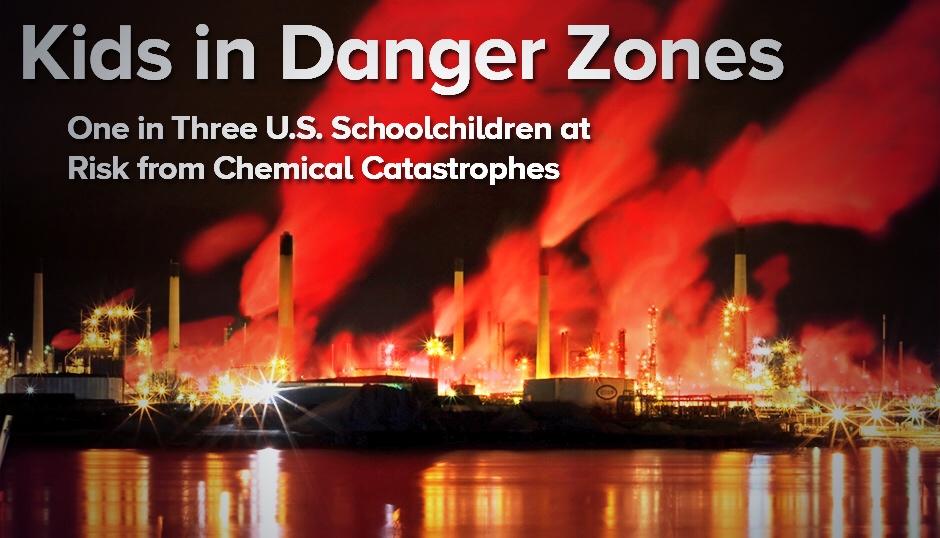
Right now, There is a great dislocation happening in southwest Louisiana, the exodus of the people of Mossville Louisiana from the village built by their ancestors over 150 years ago. The community of Mossville is disappearing under the greedy footprint of Sasol, the South African Oil and Gas company, abetted by a complicit state government, indifferent to the needs and wishes of its most vulnerable citizens, those in the fenceline communities, near to oil refineries and chemical processors.  These communities, like Mossville, bear the burden of toxic exposures, and their citizens organize to protect their health as well as the air, land and water where they live.  Organizations like Mossville Environmental Action Now seek to protect all of us from predatory extractive industries that realize obscene profits while leaving devastation in their wake.

In the coming weeks this blog will describe the situation in Mossville and suggest multiple approaches to thinking about the dispossession of one of this country's oldest African-American communities from its land by an apartheid- era South African based oil and chemical processing giant.

Many African-American, Indigenous and working poor communities have disappeared through Louisiana state policies that favor industrial expansion over the rights of its citizens. Mossville, because of the decades-long organizing by its residents, provides important lessons for how we, who believe in the possibility of creating a safe and prosperous environment for all beings, can confront the predation of industry and support the important work of local and grassroots organizing, such as that of Mossville Environmental Action Now.

This weekend watch for a post on The Emergence of an American Petro-State.

Wednesday, March 04, 2015

A Deep Environmental Funk

Compost Pile Akron winter Feb. 23rd

I know I've been away for awhile. I've been in a funk about the fate of the earth and all the beings residing on it; and all the communities in which we live. Trying to pull myself together because Mossville needs what little help I can offer, because #AllLivesMatter which is demonstrated in the way we struggle to honor how #BlackLifeMatters. So, In honor of all life, a couple links to articles that demonstrate why I have been in "the sloth of despond". Thankfully all things, including despond, arise and pass away. 

1. Oklahoma knew in 2010 what was causing all them earthquakes:

2. Only Capital, and its interests seems able to stop #MountaintopRemoval coal mining.http://bit.ly/1CwfpO5

3.  The man who brought you those lite coffee capsules that are clogging the ocean has regrets.  http://bit.ly/1AISjN9

Thursday, November 27, 2014

It's An Act of Kindness. It's An Act of Justice. Shut It Down!

#ThisistheMovement #61

I now believe I spent a lifetime with a man, my father, running scared from police violence.  

Since I first became conscious of racism (1st grade, St. Bernard's, first day of school) I have worried about what white men would do to my people, to me. It's a low-level anxiety, one that I can box up and hold at bay.  But less so lately.  Especially in regards to law enforcement.  I drive the speed limit these days and drive slowly by any time I see that the Ohio Highway Patrol has pulled someone over.  Just to make sure they aren't black, and if they are, to ascertain if they are safe.

And while I understand the choice, I find it unfortunate when Black and Brown people choose to wear the uniforms of the institutions that enforce systematic structural racism in this country.  I'm very near 60 and I don't want to see any of the young people from this past summer's youth employment project or my younger relations or any random black girl or boy spend as many years worried, scared or afraid.  I don't want to see another person killed by those who wear the uniform that supports structural inequity (even if you don't think that is what you are doing). So it's time to call a stop.  


I'm not that different from the sometimes bitter middle-aged man who was my father.  I, like him, am afraid of big demonstrations.  I'm a stay-in-the-background kind of activist.  I prefer the hard work of creating viable organizations and building individual and community capacity for social change to standing on a street corner with a megaphone.  I hate to be arrested.  But I agree with the brave, young, BOLD Black Lovers -- It's time to shut it down.

I'm going to Walmart first thing Friday morning to urge Black folk to stay away, for at least this one day.  For John Crawford, who was shot in a Walmart for carrying a pellet gun that he picked up in that Walmart, and was being sold in that Walmart just outside Cincinnati. I'm going for Tamir Rice, a 12 year old boy, playing with the modern equivalent of a dart gun, shot by Cleveland cops within seconds of their arrival at the playground where Tamir was hanging out. I'm going for the scores of others who weren't at their family's Thanksgiving table because of institutionalized, state-sanctioned murder.  I hope you will join in wherever you are.  It's time to disrupt the system that allows these events and so many other instances of structural racism to damage the lives of our relations, friends, family, community members.

 Disrupt, before it's too late for another black boy or girl, man or woman. 
Consider it an act of loving-kindness. 
Disrupt.
Before it's too late for all of us. 

Monday, November 24, 2014

No Indictment: A Letter from the Organizers in Ferguson

The Results Are In
An Open Letter from Protestors On The Grand Jury Decision (11.24.14)

In Ferguson, a wound bleeds.

For 108 days, we have been in a state of prolonged and protracted grief.  In that time, we have found community with one another, bonding together as family around the simple notion that our love for our community compels us to fight for our community.  We have had no choice but to cling together in hope, faith, love, and indomitable determination to capture that ever-escaping reality of justice.

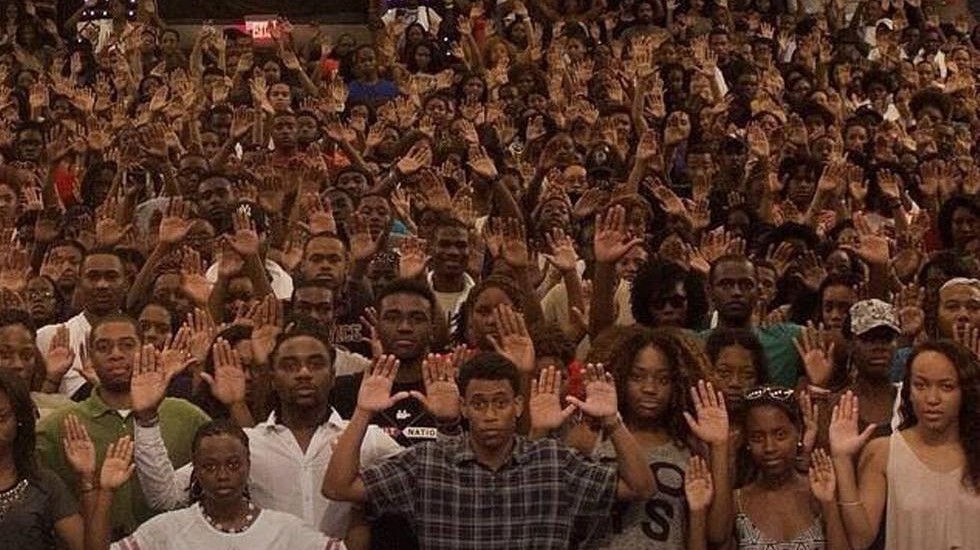
After 108 days, that bleeding wound has been reopened, salt poured in, insult added to the deepest of injury.  On August 9th, we found ourselves pushed into unknown territory, learning day by day, minute by minute, to lead and support a movement bigger than ourselves, the most important of our lifetime.  We were indeed unprepared to begin with, and even in our maturation through these 108 days, we find ourselves reinjured, continually heartbroken, and robbed of even the remote possibility of judicial resolution.  A life has been violently taken before it could barely begin.  In this moment, we know, beyond any doubt, that no one will be held accountable within the confines of a system to which we were taught to pledge allegiance.  The very hands with which we pledged that allegiance were not enough to save Mike in surrender. 

Once again, in our community, in our country, that pledge has returned to us void.

For 108 days, we have continuously been admonished that we should “let the system work,” and wait to see what the results are.  

The results are in.

And we still don’t have justice.

This fight for the dignity of our people, for the importance of our lives, for the protection of our children, is one that did not begin Michael’s murder and will not end with this announcement.  The ‘system’ you have told us to rely on has kept us on the margins of society.  This system has housed us in her worst homes, educated our children in her worst schools, locked up our men at disproportionate rates and shamed our women for receiving the support they need to be our mothers. This system you have admonished us to believe in has consistently, unfailingly, and unabashedly let us down and kicked us out, time and time again.

This same system in which you’ve told us to trust--this same system meant to serve and protect citizens-- has once again killed two more of our unarmed brothers:  Walking up a staircase and shot down in cold blood, we fight for Akai Gurley; Playing with a toy after police had been warned that he held a bb gun and not a real gun at only twelve years old, we fight for Tamir Rice. 

So you will likely ask yourself, now that the announcement has been made, why we will still take to the streets?  Why we will still raise our voices to protect our community? Why will still cry tears of heartbreak and sing songs of determination?

We will continue to struggle because without struggle, there is no progress.

We will continue to disrupt life, because without disruption we fear for our lives.

We will continue because Assata reminds us daily that “it is our duty to fight for freedom.  It is our duty to win.  We must love and support one another.  We have nothing to lose but our chains.”

Those chains have bound us-all of us- up for too long.  And do not be mistaken- if one of us is bound, we all are.  We are, altogether, bound up in a system that continues to treat some men better than others.  A system that preserves some and disregards others.  A system that protects the rights of some and does not guard the rights of all.

And until this system is dismantled, until the status quo that deems us less valuable than others is no longer acceptable or profitable, we will struggle.  We will fight.  We will protest.

Grief, even in its most righteous state, cannot last forever.  No community can sustain itself this way. 

So we still continue to stand for progress, and stand alongside anyone who will make a personal investment in ending our grief and will take a personal stake in achieving justice.

We march on with purpose. The work continues.  This is not a moment but a movement. The movement lives.

This letter was written and signed by numerous protestors and supporters, too many to list. Permission is granted in advance for reproduction by all outlets.


Saturday, October 18, 2014

Ebola and Us

(I'm taking a minute from the Black Urban Growers Conference #BUGS2014 #Detroit for this post.  Then it's back to edible landscapes and food sovereignty!)


Ebola Virus
I've been thinking about this since August, but now that my home town, Akron, OH, has hit the spotlight with the identification of U. S. Ebola patient #3, I think it's time.

Americans are spoiled.  We inflict war and carnage, exploit resources and generally mindlessly pursue our self-interest without recognizing that we are not Fortress America, reaching out and pillaging, and then dashing back, arms full of other people's resources, to our titanium castle on a big island in the middle of a big ocean.


We were never that, and we aren't that now.  Globalization brought Christopher Columbus and deadly diseases to the naive immunes systems of the indigenous peoples of the Caribbean and North America.  The results were 80-95% of populations dying.  Disease and pestilence have been introduced to every continent from some other place because of "journeys of discovery" to find the raw materials of the emerging and consolidating capitalist economies. 

There was a point in this country when people realized that it was unsustainable to continue to pollute our water supplies with our trash and feces.  That gave rise, in part, to the public health movement in the early 20th century (they had other, less honorable intentions of course).  Public health brought sanitation, vaccines, access to clinics and infectious disease control.  In the last 20 years this commitment to public health, that eventually gave us the CDC, the surgeon general and state, county and local public health offices, has been deprived of funding and government support.  The CDC has had it's budget cut by billions over the last 20 years.  

In addition, thanks to the Reagan era health care reform, privatization has resulted in for-profit hospitals with little focus on their public health responsibilities.  And then there are states like Texas.

States like Texas, Louisiana, and West Virginia have inefficient, poorly funded or practically non-existent public health infrastructures.  They pander to extractive industries -- oil, coal, fracked gas -- that need environmental
Houston.  Thanks Juan Parras of TEJAS
and public health regulations to be held at bay so they can make their enormous profits.


So, don't show up in a Texas for-profit hospital and expect them to know where Liberia is or that Ebola is epidemic there.  And if you don't have insurance (because there is no Medicaid expansion Texas) you will be lucky to be handed a bottle of antibiotics but you will definitely be sent away.  But the nurses will try to do their best, cobbling together the protective gear inappropriately so that they will be guaranteed to be the next Ebola victims.

Disease spreads, Ebola will be here.  If you are really worried about your personal health insist your local and state governments reinvigorate the systems that guarantee our public health.

Wednesday, August 20, 2014

A Request from Organizers in Ferguson

Perhaps you are like me, and have a deep and long-standing sense of guilt about not going to the Gulf Coast, particularly New Orleans, in the aftermath of Hurricane Katrina.  I have mostly
addressed that regret and shame by working with Mossville Environmental Action Now and experiencing the enduring agony that is the situation for communities of color trying to live (and breathe...) in that state's oil patch.  But it only takes the first five minutes of a situation like Ferguson for that old guilty voice to rise up, with this thought, "I should be there.  I should be there supporting my people!" 

I have learned to not give in to this urge.  And while I am obsessed with the events unfolding around the death of Michael Brown, I have been acutely aware that the Organization for Black Struggle,   a St. Louis-based community organization attempting to create some capacity for long-lasting social justice in "The Lou" and its suburbs.  
Jamala Rogers of OBS (OBS Website)
This has been born out by the following request from the people on the ground who understand the issues, resources and needs available in this critical time. OBS has an important message for us. Beginning, most importantly by asking us to STAY HOME.  
Here's their message, received via Spirit House in Durham, NC. They are an affiliate of Black Organizing for Leadership and Dignity (BOLD).


This from The Organization for Black Struggle in Ferguson:

"First let me say, we are appreciative of the calls and texts of concern for us in the state of Misery. For many of you who responded to the call for funds to support a full-time organizer, we are beyond grateful. The Organization for Black Struggle is now able to put a team on the ground in a more strategic, focuses and sustained way.

Your local comrades have been on the ground since Day One of the uprising--initially providing security for both protestors and small businesses located on the busy strip of West Florissant (now the epicenter of the rebellion)--as well as maintaining surveillance of the militarized police force.

OBS convened a group of over 50 people on Friday--labor, community, student activists-- to coordinate our efforts, to rally around the community demands, and most importantly to began setting in place the processes/mechanisms for Ferguson residents to fight for long-term reforms, i.e. civilian oversight board, etc. We organized a Day of Solidarity yesterday that brought thousands together to rally at the apartment complex and then move to workshops/trainings at Steve's church. 

We fully understand that soon the media will roll out to the next hot issue and battle-fatigue will set in for the residents. With all eyes on St. Louis now, we must maximize our impact in the short run as well as the long run.

You have seen the images and being conscious of the media's spin, you can read between the lines to determine what's bullshit and probably be pretty inaccurate without having to be on the ground. We ask that you use all available avenues to make the epidemic of police murders a national issue.
For comrades asking about how they can support this struggle, here are a few suggestions:
  • Help shape and reframe the narrative around looting; the media and even some well-meaning folks are getting caught up with a small piece of the issue that involves an even small percentage of the thousands who have been in peaceful protest. The focus and blame needs to put squarely on the white power structure in Ferguson for their years of political and economic abuse topped with police abuse.
  • Lift up the serious issue of urban centers being treated as if they're militarized zones. As much as we've talked here about the militarization of the police, seeing was believing. When
    Ferguson? No.  New Orleans, 2005
    the country police showed off their military hardware, most fair-minded people were horrified and now we have more allies than ever before. Just in time! The St. Louis police chief wants drones to be added to a bond issue.
  • We have discouraged people from coming to The Lou for a variety of reasons but understandably folks want to be where the action is. This is a bad habit that the movement needs to break--running all over the country to a fight when the damn fight is in your own backyard. (emphasis mine)  Of course, there are times when a call is put out for people's presence because it's the numbers that are needed. This is an opportunity to connect the Mike Brown murder with all of the other extrajudicial murders in the country. (See Fletcher's recent article in ZNet.) Activists and organizers need to began examining/criticizing policing methods where they live and put some real energy into make these occupying forces accountable.

Lastly, if there's something you hear about Ferguson that needs clarifying or you get information that you think is helpful (like the press release I received on the County Police Chief going to Israel for counter-terrorism training a couple of years!), please feel free to call or to share..."

 So, I'm staying home. Send a donation to Organization for Black Struggle so they can hire an organizer to be in Ferguson and build community capacity to address their own problems. 

For my part,  I'm checking in with one of Akron's local social justice group, Stop the Violence Akron Movement, and putting my efforts at the service of BOLD toward figuring out how we build a movement based on working locally, in our own weed-infested backyards.

Monday, August 18, 2014

Ferguson & The Declining Effectiveness of Civil Rights Era Leadership

As the reaction to the murder of Michael Brown by a Ferguson, MO cop continues to Many have found the actions (or inactions) of Missouri Governor Jay Nixon  incomprehensible.  On Thursday, August 14, the day he turned enforcement responsibilities over the the Highway Patrol, he made his pronouncements from the relative safety of the University of Missouri.  At some point on Thursday he appeared in Floissant, MO, 3 miles from Ferguson, to seek the prayers and intercession of the local African-American clergy.

Those spiritual efforts have not proven wholly effective.  In fact, local clergy and community leaders have lamented their inability to control the protestors, many of whom are under 30 years old and, frankly, able to stay awake and out in the streets far later than their elders.  Ferguson is a rage that has grown beyond the control of traditional non-violent protest tactics. Perhaps fueling this rage is the disappointment in the outcomes of the civil rights years, not only the police violence, but the unfulfilled expectation of good jobs, housing, and peace in our communities.  Just as our ancestors experienced the fearsome and effective backlash of the white citizens movement at the end of Reconstruction, African-Americans of the last half of the 20th century have experienced an organized reaction, fueled by the defection of southern Democrats to the Republican Party, and the refuge they have taken in the toxic rhetoric of welfare reform, gun rights, drug wars and zero tolerance education policies.

Those of us who made class moves away from historically black communities or embraced the delusional prosperity gospel of the 1990s megachurch  frequently choose to blame those literally imprisoned, or living under a kind of occupation, with the constant reminder of their conditions of servitude:  no or poorly paying jobs, underfunded schools, and a punitive law enforcement that guarantees no one strays from physical and psychic boundaries.

There has always been a black underclass. During segregation we had to live in close proximity to
Howard University Students #Don'tShoot
each other.  As a post-voting rights era class divide has emerged and become a permanent feature of the African-American community this underclass has become more isolated and frequently demonized by those who have climbed (and forgot to lift up the community with us).  So now we wring our hands, sick with outrage and shame.

As I finish this, with no real conclusion to offer, the National Guard is on its way to Ferguson.


Saturday, July 19, 2014

Return Community Control of East Akron Community House

Local organizing is really hard here in Akron, Ohio.  There aren't
many social justice organizations and the ones that exist are under-resourced and politically marginalized.  I have chosen to throw in my lot with the East Akron Community House.  Here is a link to an Op-Ed I was privileged to have published today in the Akron Beacon Journal: Building Capacity and Honoring Our History at EACH.

Because of the political situation in Akron I am asking all my out-of-town friends and colleagues to sign the MoveOn.org petition in support of EACH and community control of the building and programming.  The editorial describes the situation.  Please consider signing EACH Petition.  #ReachforEACH.  Thanks.

Friday, October 04, 2013

Queer Dreams & NonProfit Blues

Here among the queer social change glitterati @BCRW. Follow the conference on twitter #queerdreams. Hoping to say hi to the fabulous Abe Rybeck. Follow me  @Rebeccaojohnson

Wednesday, August 28, 2013

Environmental Racism 50 Years After the March On Washington

There's a kind of busy-ness that overwhelms a girl hanging out in our nation's capital.  I had the privilege of attending a wonderful fundraising event with the leadership of Southern Echo on Monday night (goal met!  thank you to all my friends who gave!).  And yesterday, among other activities I had the opportunity to share a meal with Michele Roberts, coordinator of the Environmental Justice and Health Alliance.  As we discussed the groups and places we love: Mossville and MEAN, Black Women for Wellness in Los Angeles, the folks in Delaware trying to rein in the refineries, the fracking threat to my own home area in northeast Ohio, it became apparent how much race and poverty determines who is most burdened with the worst effects of extractive industries in this country as well as how communities respond to those threats.
Michele Roberts Representing!

As a proposal is floated to make Mississippi a radioactive waste repository and the good people of Mossville struggle to attain a fair relocation agreement with Sasol, the South African chemical processor, which will mean the physical end of almost 150 years of free black people living and working in the community their ancestors founded at the end of the Civil War, and uranium mining is being proposed for West Virginia (I could go on and on here) we have to recognize that communities of color and poor communities are the least protected but frequently the most unified in seeking solutions that will protect their land, their health, their very lives.

I don't have a sign on me but hopefully today I'll be able to march next to Michele and her sign declaring, STOP  ENVIRONMENTAL RACISM NOW!

Check back in.  I'll be live blogging from my phone, in the rain, at the Lincoln Memorial.

Sunday, July 14, 2013

So, My White Activist Peeps, What Are You Going To Do?

I began composing this post in my mind before the George Zimmerman verdict.  When the House of Representatives passed a food bill stripped of food stamps benefits I began to wonder, "Do these congressional representatives, in highly gerry-rigged districts, not have any constituents who
are poor, working folks, who need the pitiful little help with getting a decent meal that food stamps represent?"  And I answered myself, "Of course they do, they are poor and working white people, and they don't vote."

And these white people live with the illusion that black people are the problem, the enemy, the cause of their misery.  And, of course, we all know that none of this is true.  So my white activist friends, whatever the analysis you bring to your work -- whether it is based on class, anti-racist analysis, feminist post-structural theory, whatever -- you must recognize that black people cannot solve the problems like economic inequity, broken criminal justice system, and the multi-dimensional travesty that is the state of Florida.  Poor white people have to recognized their interest in these problems.  

I love all of you, believe many of you do great work, but I live in a bifurcated world -- on one side I teach in a school that is overwhelmingly white and privileged, on the other side I live, volunteer in and consult with organizations that are overwhelmingly populated by my people, black and brown people.  I appreciate your good intentions, the excellent work you do with immigrants, domestic workers, low-income communities of color, and many other efforts that seek to address the grievous injustices that people of color experience every day. But the changes we want -- immigration reform, food justice, health care for all, end to the school-to-prison pipeline, a livable minimum wage, I can go on -- will only become real when marginalized white people can see their interests are our interests:


We who believe in freedom cannot rest
We who believe in freedom cannot rest until it comes

Until the killing of Black men, Black mothers’ sons
Is as important as the killing of White men, White mothers’ sons
We who believe in freedom cannot rest, We who believe in freedom cannot rest until it comes.
                  "Ella's Song", Bernice Johnson Reagon
I don't know what it will take for you to begin to engage your own people, but I suggest you figure it out, and soon. While we may not be able to rest, some of us are getting mighty tired.

Wednesday, May 29, 2013

Stand Up for Ohio! Stand Up for Returning Citizens!

Let me just say, sleeping on gym mats is just as uncomfortable at 58 as it was at 18.  I was never very good at roughing it, but at least this time it was for a worthy cause.  For two days, April 30 and May 1, I was on a statewide tour with the Stand Up for Ohio campaign of the Ohio Organizing Collaborative.  

I joined the bus in Youngstown (the fabulous Patricia Maher agreed to ferry me from place to place).  The gym mats were at the Youngstown YMCA.   The tour had started in Akron on Sunday.  We had a lively opening rally and then proceeded to a little direct action at the home of David Brennan, owner of White Hat Management.  Brennan operates the largest for-profit charter school network in Ohio (and one of the largest in the country). The experience of Akron parents is that Brennan doesn't actually educate their children but makes big bucks not doing it -- he collects 95% of the $816M  allocated to charter schools each year while most of his schools are performance ratings are Ds and Fs.

But Brennan, as shameless as his profiteering might appear, is not the focus of this posting.  Returning Citizens, many of them the victims of Ohio's unwillingness to provide good educations to all it's children, are who I want to tell you about.

Returning Citizens are our brothers and sisters, cousins and parents who are returning from prison.  This appellation is one of the gifts of moving back to Ohio.  I have found that organizers in other states are using it but I first encountered it here in Akron, and just this year.  The Stand Up for Ohio Rally focused on Returning Citizens was in Newark Ohio.  It was a splendid, community wide demonstration of concern for those returning, analysis of why so many black and brown people end up in prison and call to action: end the war on drugs, focus on treatment, get the drug dealers out of low-income communities and end the school to prison pipeline.

Zero tolerance policies, classrooms with too many kids, a focus on
Here's a rendering of me leading a workshop
on the bus!  Thanks Assata!
test-taking rather than critical thinking, and poor funding in general result in schools that are being locked down and young people being put out of, pushed out from, or bored out of their minds in school.  Many end up in places like David Brennan's Life Skills Centers where less than 15% of kids graduate.  


I encourage you to find folks in your community working on the school to prison pipeline or with Returning Citizens.  Give them your energy and support.  I know I will.
  

Monday, May 13, 2013

William Gordon Johnson, May 20, 1953 - March 20, 2013

William "Bill" Johnson was my brother.  I always called him my biggest brother but there was no other -- he was my only brother.  That he passed away almost two months ago and that I am only now writing my memorial to him is a failing on my part.  I was caught off guard by his death.  

Here is the text of his obituary, what he wanted written about himself:

 William G. Johnson, age 59, of Akron passed away at his home March 20, 2013 after a brief illness. 

Bill was born May 20, 1953 in Akron to the late Edna M. Johnson. He was a 1971 Graduate of St. Vincent High School and attended Akron University. He worked many years in Quality Control. 

Bill loved music, he enjoyed playing the Bass Guitar and listening to jazz and rock music especially Jimi Hendrix and Miles Davis. He loved to read, enjoying history and all types of machinery from cars, trucks, trains, to tanks. He was very knowledgeable about cars, able to pick out the make and model of a classic at any distance. Bill was a natural athlete, a long distance runner in his youth, and long distance cyclist on his Green Raleigh Bike later in life. He loved the Summit County Metro Parks, he spent many hours enjoying the parks. He also enjoyed photography of all kinds, especially taking photos of his children.

He is survived by his wife and best friend of 37 years, Virginia Johnson; his daughter, Alania Claire Johnson (Boyfriend, Andrew Mason) of Kingsville, Texas; his son, Miles William Johnson (girlfriend, Jennifer Patchen) of Berkley, California; his sisters, Becky Johnson of Akron, and Gena Johnson of North Hollywood, California; his father-in-law, George Botzman; and many brothers-in-law, sisters-in-law, nieces, and nephews.

Bill had a huge soft spot for cats, he would feed any stray that would stop by, because of his love, memorial contributions may be made to One of a Kind Pets, 1929 W. Market St., Akron, Ohio 44313

There are no calling hours or services. Private interment of his ashes will take place at a later date. Please visit www.dunnquigley.com to share condolences and memories at Bill's book of memories.

####

I want to share one memory that speaks to my brother at his best: playful, subversive, proud of himself and his black brothers.  

We went to Catholic schools, first St. Bernard's grade school then St. Vincent High School (now St. Vincent-St. Mary's) in Akron, Ohio.  Bill was two years older than me so when I got to St. V he was a junior.  At the time, St. V was publicly renowned for its athletics (as it is occasionally today) but for those of us who navigated its hallways, it was notorious for a kind of thuggishness that sometimes comes with athletic attainment. And there weren't many black students.  In Bill's class there was one girl, I think, and four or five boys.  He was friends with Steve and Tony.  

My recollection of dates is fuzzy, but I'm pretty sure it was the school talent show of  my freshman year.  I don't think I told anyone but I was terrified of the junior and senior class boys, brutish Polish and Italian linebackers (Akron was a very ethnic place back then) who tormented their underlings.  I digress.  

Everyone was required to attend talent show.  My brother and Tony performed.  Tony, who I think was a running back for the football team, had a black belt in karate.  Both Bill and Tony had glorious afros (as you can probably tell from the photo).  Tony, with Bill's able assistance, proceeded to break things with his hands.  Boards, bricks, stuff.  Neither said a word.  Just bowed and walked off stage, leaving their handiwork behind.

Everyone knew that was my brother and his friend.  All eight of us scrawny, black and brown freshmen knew we were safe.

And lastly, for Bill, for all of us,  a poem by Lucille Clifton.  This gave me the courage to finally write this remembrance (I realize now that all 3 men have now passed away -- Bill and Tony, and Steve, their friend):

you are not
your brothers keeper
you are 
your brother

the one 
hiding in the bush
is you

the one
lying on the grate
is you

the mad one in the cage
or on the podium
is you

the king is you
the kike is you
the honky is you
the nigger is you
the bitch is you
the beauty is you
the friend is you
the enemy    oh

others have come 
to say this
it is not
metaphor

you are not 
your sisters keeper
you are 
your sister    yes

From The Ones, The Collected Poems of Lucille Clifton 1965-2010
(thanks to Jean Riesman for sending just what I needed)


Friday, March 22, 2013

Visualizing Emancipation

I forgot I had written this so I'm posting it now:

I teach near New York City.  So that means I have access to a vast array of cultural riches.  Of course I rarely get out of my sauna-like office and on the Metro North to do anything in the city.  So one of my New Year's resolutions was to do things.  I had an event at Columbia scheduled for this past Thursday so I decided that would be the day.  Of course it was 15 degrees. I went anyway. It was awful cold and out of respect for my partner's reputation I couldn't wear my father's old gray fuzzy fleece ice fishing pants to Columbia.  But my first destination was Harlem and no one was stylin'.  I scurried as fast as my frozen knees would take me to the Schomburg for the Visualizing Emancipation exhibit.

From Visualizing Emancipation
Deborah Willis, the brilliant photographer, scholar and curator, has brought together 171 images of enslaved and free black people, with emancipation as a key event.  We are in a long remembrance of the Civil War, 150 years ago, foreshadowed by the South's secession, beginning with its first battle at Fort Sumter in 1861 and continuing on for deadly years, ending in victory by Union forces.  Central to this victory was Emancipation.  It depleted the South of laborers and allowing black men to bear arms on the Federal side. Visualizing Emancipation depicts slavery and freedom, the pride of bearing arms and the hope of the contraband Negroes escaping into the Union camps.  It shows colored folk as both ordinary and courageous, it shows a people longing for citizenship and then struggling to keep it. 

Did you know that smiling is a learned response?  Before photography we didn't do it as much as we do today.  Most of the subjects of this early photography don't smile.  One couldn't move, lest the exposure get ruined,  but neither does anyone look away from the camera.  There are images of newly freed men and women in the rucksack and rags of their enslavement and an emerging middle class carefully quaffed with the children in matching coats.

 Much has been made this year of the tradition of Watch Night, the New Year's Eve vigil kept in many African-American churches which was popularized the year black folks stayed up waiting for word that Lincoln had actually signed the Emancipation Proclamation.  And it is a wonderful tradition but Willis's exhibit has several photos of Emancipation Day celebrations across the decades.  On June 19th black people by the hundreds would come out,  listening to speakers, marching with banners, claiming their place anew in the nation they had helped build. Those celebrations continue today.  Now everyone calls it Juneteenth, specifically remembering the day the last slaves were freed, June 19, 1865, in Galveston Texas. 

The exhibit ended March 1, but Deborah Willis and Barbara Krauthamer have put together a "pioneering" volume, including some never before published photos.  Today, we are inundated with images, most of us possessing photographic technology that no one would have imagined possible in the late 19th and early 20th century.  We forget there was a time when a family portrait might be a once in a life time event, to be shared with loved ones on the equivalent of little calling cards called cartes de visite.  When freedom, once so elusive, had to be celebrated and documented in the lives of ordinary people who had struggled to win and later, might die to protect.

Thursday, January 24, 2013

On The Breeding Lesbians of South Brooklyn


On the Habits and Habitats of the Breeding Lesbians of South Brooklyn
by Jean Kahler
 1. The South Brooklyn Lesbian: Species or Race?
Much controversy surrounds the taxonomic status of Brooklyn Lesbians: should the Lesbians of North and South Brooklyn, concentrated respectively in Williamsburg/Greenpoint/Bushwick and Park Slope/Prospect Heights/Clinton Hill/Bed-Stuy and adjacent neighborhoods, be considered separate races of a single species, like the Yellow- and Red-shafted Flickers of species Colaptes auratus?  Or are they more properly defined as two separate species, like Baltimore and Bullock’s Orioles, once thought types of Northern Oriole?
Red Shafted Flicker Tail Feather
It is the position of this author that the Northern and Southern Brooklyn Lesbians must properly be separately named species of the genus Sappho.  The two display marked distinctions in plumage and diet, with the Northern species preferring H&M ‘80’s nostalgia synthetics and Pabst Blue Ribbon and the Southern natural fibers, Dansko clogs, and whiskey-based cocktails. 
The issue is complicated by what has been termed the “Zelig Effect” common to all Lesbian populations, in which new couples often rapidly shift in appearance such that the individuals are nearly identical in under a year’s time.  Some argue that so-called casuals to a given section of the borough — Northerns or Southerns blown off course while attempting to avoid an ex* or by mistaking the G train for a real subway — may defensively adapt to the foreign environment by taking on traits of the dominant population, ultimately fooling the natives into accepting her as one of their own.
*[Though many Brooklyn lesbians do, in fact, engage in the ex-hoarding behavior typical of the genus, this trait is less strong in the NYC species than in those of smaller locales.  Further research is needed to determine whether this phenotypical variation is a result of founder effect or or specific environmental pressures. Ed note: By "ex" the author means ex-lovers]

Gay Pride 
However, the crucial test in any instance of the so-called species problem is interbreeding: populations that can interbreed, even if they do so only in limited geographical areas of overlap, are properly named as races, while those that cannot are defined as individual species.  The breeding behavior of the types of Brooklyn Lesbian is, again, a matter of some argument in scientific circles, but while interbreeding between the groups (perhaps limited to the transitional borderlands of Bushwick and Bedford-Stuyvesant) is suspected by some scholars, it has never been conclusively proven.  Therefore, this paper will concern itself only with the Southern species, Sappho parkslopica.
 2. Courtship Behavior: Territoriality and Dominance
 As is common across the Animal kingdom, parkslopica engages in multiple forms of territory-marking behavior during the courtship phase.  Scent-marking behaviors include environmental marking via burning of incense and home-brewing of kombucha, and also pheromone-mimckry via topical application of ginger oil and/or Old Spice.  The use of patchouli, once wide-spread, is now seen only rarely.  Its decline is not well-understood but likely related to its lousy smell.
Lesbian Cats
It is theorized that cat dander, on clothing and emanating from apartment doors and windows, also acts as a means of alerting Lesbians to one another’s presence.  In that case, the broadcasting of said dander may be increased by Stoop-Sitting, a territorial behavior common across all species of Brooklynites, in which the available Lesbian spends several hours of the afternoon or evening sitting on the front steps of her building, nodding or jutting her chin out at those who pass by, to both display herself to potential mates and ward off rivals.  Stoop-Sitting is especially important to the dog-owning Lesbian, who will often further clarify her species-identification by naming her dog or dogs for lesbian literary, musical, or style icons, e.g., Rita Mae, Tigre, Rosie, Indigo.
Sound-marking is less common among parkslopica than among straight Brooklynites in general, though the Acoustic Guitar behavior seen in other Lesbian species may be incorporated into Stoop-Sitting.  Some members of the species will engage in a fascinating method of call-amplification by convincing a local bartender or barista to let them “DJ” the bar or coffee shop by plugging their iPods into the sound system and playing a mix of courtship music (Sleater Kinney, Tracy Chapman, k.d. lang, etc.)
Dominance behavior in parkslopica generally revolves around community organizations, the Park Slope Food Coop being the most well known.  The Lesbian in search of a mate will almost without fail join at least one and often more.  The Lesbian seeking to assert dominance will  volunteer to join the governing board of her community garden or become the Squad Leader of her Food Coop work shift, thus advertising to potential mates her free time, high level of interest in types of kale, and robust ability to “process issues,” all desirable attributes in a partner.  The truly dedicated dominant Lesbian may seek to organize her own food coop or Community Supported Agriculture group, perhaps as a means of proving her ability to manage multiple mates in a polyamorous context.
3. Reproductive Mating Behavior
Little is known about the reproductive mating behaviors of Lesbians, except that they are nothing like those portrayed in the L-Word.  Scholars have ascertained that mating for the purpose of reproduction takes place in both home and clinic settings.  Turkey basters are emphatically not involved; the popular myth surrounding them may be a cynical attempt on the part of the species to distract attention from actual methods by appealing to male insecurity: a man wondering if other guy’s output could really fill such a large device is unlikely to ask further questions. 
Scholars agree that reproductive mating in parkslopica involves or perhaps requires large amounts of poetry and blogging.
The Author and her little guy

4. Rearing of Young
Signs of successful reproductive mating in parkslopica include the feathering of their nests with bird-themed art and fabric goods from Etsy, Scandinavian wooden furniture (in particular Stokke, IKEA), and books on baby sign language.  Plumage changes invariably include baby-carrying devices, each accompanied by a particular set of calls proclaiming its superiority over other types.  Other typical call patterns include long, apparently thought-out opinions on Attachment Parenting, Baby-Led Weaning, Co-Sleeping, and the pernicious qualities of fruit juice.  Interestingly, calls of Lesbians with male offspring often contain diatribes for or, more commonly, against circumcision, which are in many cases the first sign a Lesbian has ever given a damn about the existence of penises.
While these calls as rendered by different Lesbians sound identical to the non-Lesbian ear, field observations indicate variations exist outside of the range of non-Lesbian hearing.  Two Lesbians seeming to espouse the same parenting philosophies frequently react as if their ideas are so opposed and mutually repugnant that the two can no longer associate with one another at all.  This conflict behavior is thought to ensure separation between couples adequate to prevent the communalism and pair re-shuffling common to Lesbian species during other periods of the life cycle.
Safety Note: Just as naturalists and tourists are rightly warned against standing between a mother bear and her young or a hippopotamus and the water, researchers in the field encountering a Lesbian with young should under no account challenge the Lesbian, however unintentionally, by inquiring who the “real mother” is or whether BPA is “really so bad.”

5. Ecological Succession:

Urban Lesbian species have long been recognized as part of the vanguard of the gentrification process, whereby neighborhoods whose rents are low (often as a result of industrial and/or Robert Moses-style “urban renewal”-related blight) become colonized/invaded (as styled by the gentrifiers vs. the pre-gentrification residents) by artists and Lesbians, whose presence in turn prepares the area for habitation by, in turn, graduate students, gay men, hip single straights drawn to apartments in which a lack of basic interior building materials, previously proof of squalor, is recast as “luxury” (See: “spacious open floor plan,” “exposed brick”), and, ultimately, investment bankers whose children’s first names are Anglo-Saxon surnames.    Naturally, pre-gentrification populations do include a naturally-occurring low rate of Lesbianism, as all populations are theorized to, but it is the influx of so-called “pack” Lesbian clusters whose presence triggers or indicates the early phases of gentrification. 
While Lesbians’ place in this process is sometimes self-described as motivated by an attraction to “authenticity,” as otherwise observed in middle- and upper-middle-class Lesbians’ fondness for markers for blue collar culture (Carhart jackets, diners, mullets), it is more probably a result of the lower income of women versus men (an effect intensified by the lack of a balancing male salary in Lesbian relationships), particularly women who work for non-profit organizations or the no-profit sector of feminist bookstores and ethical tea houses. 
Species parkslopica gets its name from the early phases of genrtification in the neighborhood of Park Slope, but the process of succession is so advanced that, while individual Lesbians still live in the neighborhood, the environment can no longer support a full pack.  Facing extinction in its eponymous zone, parkslopica has established new colonies in other south Brooklyn neighborhoods, with Ditmas Park, Windsor Terrace/Kensington, and Crown Heights seeing rising levels of Lesbians With Children. 
Curiously, parkslopica’s range appears limited to high ground; there are no credible reports of colonies in Sheepshead Bay, Coney Island, or similarly low-lying neighborhoods.  Possibly this is due more to an aversion to salt spray than to low altitude, as the Lesbian population of low ground areas of inland Brooklyn (Bushwick, Bed-Stuy) is rising.  Such an aversion would be unsurprising in a genus containing large numbers of individuals whose instinct leads them to spend the heat of summer not at the shore but in the woods of central Michigan, well-insulated from salt and sand. 
Reports surface from time to time of parkslopica clusters appearing in areas of Jersey City and Hoboken, but these are largely unsubstantiated and are likely evidence of the Mocking-Broker effect, wherein real estate brokers attempt to lure customers to a given neighborhood by claiming that a sizable population of that customer’s species is already established there.  While individual Lesbian families may relocate to join packs in Portland, the Bay Area, or Northampton, a strong taboo exists against leaving Brooklyn for other NYC boroughs, as evidenced by the bonding call, “Death Before Queens.”