Monday, August 15, 2016

Stop the Sasol Land Grab of Mossville: What's a Voluntary Property Purchase Program

Environmental Justice Elders Lead Off Demo at
Sasol Houston Headquarters
Many of you have asked what's up with my blog.  I'm hoping to make a transition to a website with the blog embedded but I don't seem to have the skill or talent to accomplish that.  I'm looking for help.  I'll let you know how it goes. On to the main event!
______________________________
Sasol, the apartheid era South African synthetic fuel company is perpetrating an coercive, deceptive and financially unjust grab for the land of people of Mossville Louisiana.  You all have read about Mossville over the years.  This post is about the collusion of the oil and chemical industries in creating something called the Voluntary Property Purchase Program to buyout communities and avoid liability for industrial toxic pollution that drives down property values, poisons the environment and destroys the livelihoods and health of the communities they are "benefitting."

I have found 4 other instances of oil refiners and chemical processing companies using Georgia-based Community Interaction Consultants (CIC) as their front organization in the negotiation of buyouts, all highly contested -- 2 in Michigan, 1 in Arkansas and 1 in 1999 in Baltimore.   The Port of Corpus Christi seems to be taking bids on one now.  John Mitchell, the president and founder of CIC, describes the company at his LinkedIn page as providing  

  • "community relocation consulting, program development, and program administration services for heavy manufacturers facing diminution of value claims"... and, 
  • "Beginning in 1989, consulting for the development and administration of property programs focused on green belt expansion for heavy manufacturing sites."
Green belts are supposed to be areas protected by zoning policy to maintain wild, agricultural and open space as a buffer between industry and settled areas.  International environmental justice activists have created a Green Belt Movement.  Of course international mega-corporations see these areas as expansion opportunities, greenwashing their buyouts as relocations, property value protection programs, and most egregiously, as voluntary.

Dislocation from ones home and land (especially in Louisiana where multiple generations live and build on the family property under the ownership of one family member) after your property has been polluted by dioxin, oil spills, benzine releases and other chemicals, your family's health destroyed and the concerted effort of community members and their allies to gain the attention of, and action from government, industry and the judiciary ignored -- in the case of Mossville for over two decades -- does not lead to a freely made decision to voluntarily sell one's property to the perpetrator (or the perpetrators' stalking horse) of the harm the community has experienced. 

There is probably need for a Department of Justice investigation into oil and chemical industry collusion in creating the VPPPs in order to avoid the true cost of their egregious disregard for the communities they have driven out and whose land they have come to own. 

Thursday, March 24, 2016

Engaging New Learning Environments

As some of you know, I am now working full-time at SLC developing an End of Life Care Program.  As part of that I am developing learning opportunities that are both online and face-to-face.  To help me get a grip on this I am taking an online course called #BlendKit2016, to help me learn about course development and to develop my own practice in this new learning environment.  So this is my first reaction blog to a 5 week course that will end next week.  As a learner I am finding that I am able to put off doing online work almost indefinitely.  This is important self-reflection for designing for students who may be like me -- late middle-aged, abundantly degreed, easily bored.

Anyway.  The most striking statement in the first chapter of readings was to "Begin with relevant metaphors for learning" (Thompson, ed., Reader BlendKit Learning Toolkit, https://blended.online.ucf.edu/, p. 9).  To me this is the second starting place.  The first is the "relevant metaphors" for learners.  Individual need is highly valued in the theorizing so far.  This is important but I am equally concerned about building learning community and how adults, especially, come together to learn and solve problems. Transmission of information is important, and addressing barriers to learning for individuals is the obvious task of any teacher.  So I will reflect on these two metaphors and get back to you.

In the case study #2 the chart on critical design decisions is immensely helpful, as is the description of studio-based instruction. Both case studies used a similar design strategy, beginning with "learning and teaching principles" (p. 10), suggesting what is specific to the field or discipline, choosing the learning technology that fits the field, the setting, the teaching capacity and the principles, and then describing how online and face-to-face will interact and complement each other.

There.  I did my assignment.


Saturday, July 18, 2015

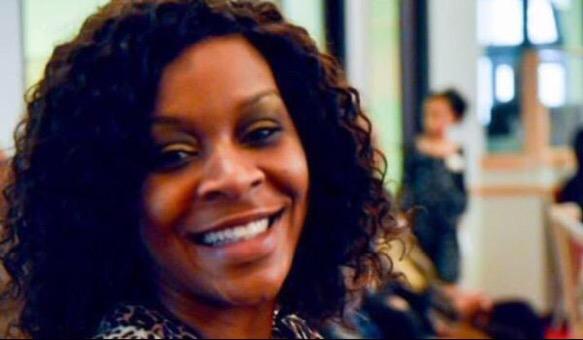
Sandra Bland & Driving While Black

Sandra Bland #SayHerName
We don't know how Sandra Bland (#SayHerName) ended up dead in police custody after an unnecessary, ultimately violent traffic stop and arrest in one of the scarier parts of Texas, at least if you are driving while black.  Waller County Texas has a history of racial tension, a police chief who was fired from the nearby town of Hempstead for unremitting racist behavior; and Waller County, on the edge of Harris County and the Houston municipal limits,  is in the part of the state where police departments make lots of money from stop and seize activities.

A friend, who like me, has enjoyed the freedom of driving as part of our training and consulting activities, commented about how much what happened to Sandra Bland frightened her.  And I share the same worry, especially when crossing the Mason-Dixon line (although central PA always gives me pause).

I once researched a non-fiction piece to answer the question, in how many states, between Maine and the panhandle of Florida, would I find the confederate flag? This was in 2004.  I loaded up the Brown Dog, and we set off from Boston on a 3 day drive -- we had been in Maine and NH earlier, which is why I wanted to write the piece.  The important detail here is the Brown Dog.  Of course I found the confederate flag, stuck to, flapping from or emblazoned on something in every state, from Maine, New Hampshire, Massachusetts (South Boston of course),  New York, and just over the line in the Pennsylvania town of Milford, on a flagpole in front of the cigar shop in its historic district.  I was not surprised, and only appalled once, in West Virginia at the site of Booker T. Washington's first home house in freedom, a truck perpetually parked nearby, a battle flag prominently affixed to its bumper.

Brown Dog was my Co-Pilot
But this post isn't about the flag.  It's about the security I felt with my 60 pound lab/shepherd mix by my side.  An utterly harmless dog who seemed to strike terror in the minds of men.  Brownie, the Brown Dog, traveled the country with me, north and south.  He passed on in 2008, to be with the elders who he had
known and loved.  And every year without him, I am a little more fearful about driving alone.

And isn't this the point of terrorism?  To deprive us of the freedom to go where we please, do what we want, enjoy this country as most white men believe it is their right to enjoy this country? (I know white women think they have this unvarnished right but that is only because of their misplaced faith in white supremacy.  They forget to look over their shoulders at the patriarchal vengeance that seeks to keep them in check.)

#SayHerName Brief, AAPF
I have no words of encouragement, no analysis that relieves the unease I feel -- many Black women feel, most Black men feel -- that in those uninvited interactions with the enforcement mechanisms of white supremacy, the local and state police agencies, our lives do not matter.  We can't be respectable enough, educated enough, dignified enough, distinguished enough, docile enough.  So we might as well resist and disrupt with all our might.

"When I dare to be powerful, to use my strength in the service of my vision, then it becomes less and less important whether I am afraid."  Audre Lorde, The Cancer Journals, p. 13